
Changelog
Follow up on the latest improvements and updates.
RSS

For Enterprise users:
On February 11th, our custom AI speakers are getting a major upgrade that will deliver voices with more natural speech with better intonation and pacing*.
These upgrades also bring faster text-to-speech generation, and add support for custom AI speakers in 19 languages: English, Spanish, French, German, Italian, Portuguese, Polish, Croatian, Czech, Danish, Dutch, Finnish, Hungarian, Malay, Norwegian, Romanian, Slovak, Swedish, Turkish.
You can hear a before and after sample below. This voice was trained first on our old model, and then retrained with the upgraded model. Have a listen:
If you prefer to opt out you can let us know by submitting a ticket to our support team.
*Please note that these upgrades will apply to Text to Speech - not Regenerate.
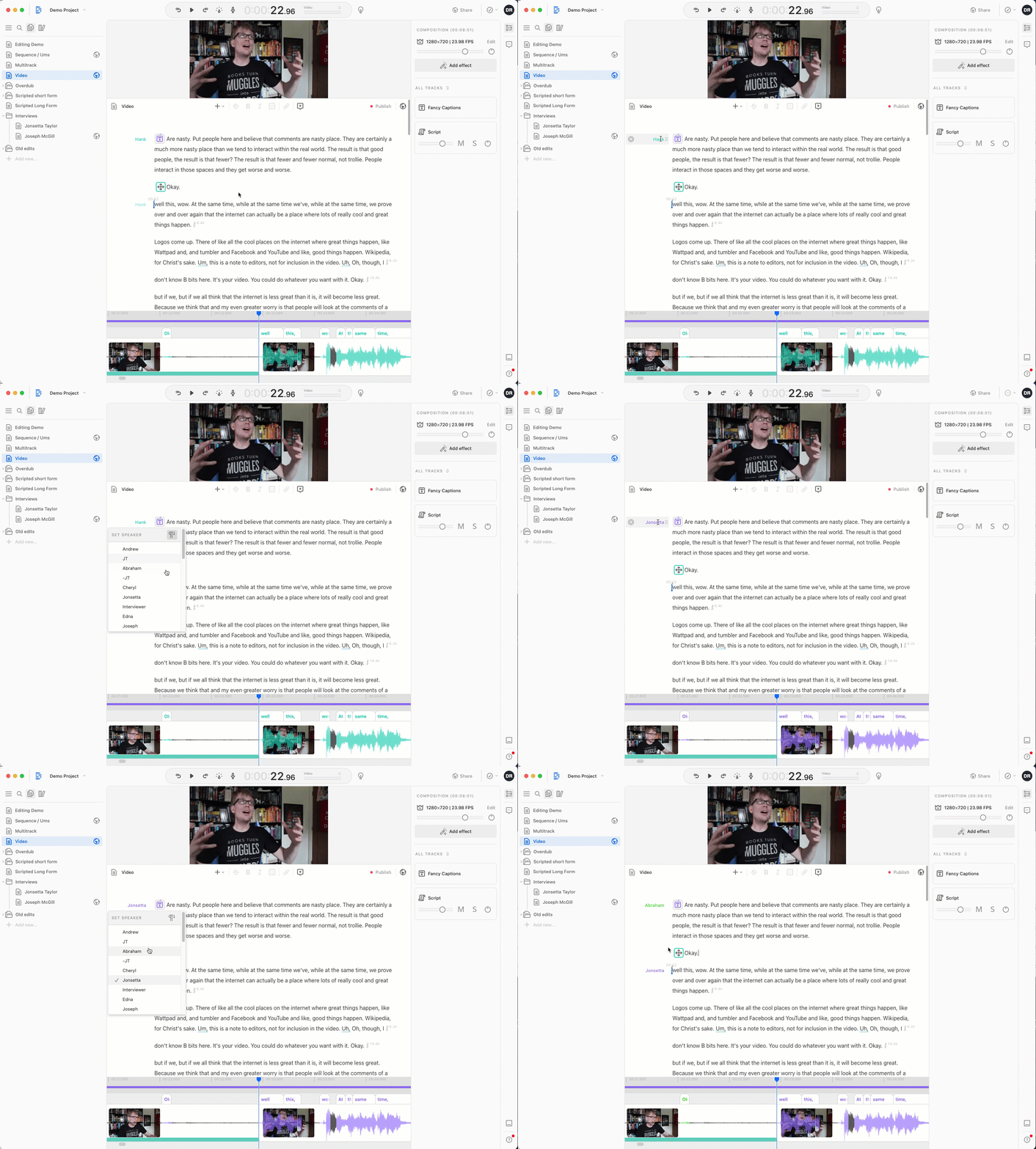
Descript now allows you to set the default behavior of speaker label changes in your Composition. Enable the Toggle to apply the changes to the following paragraphs of the same label through to the next speaker label change. Disable the toggle to only change the speaker label for the currently selected paragraph.
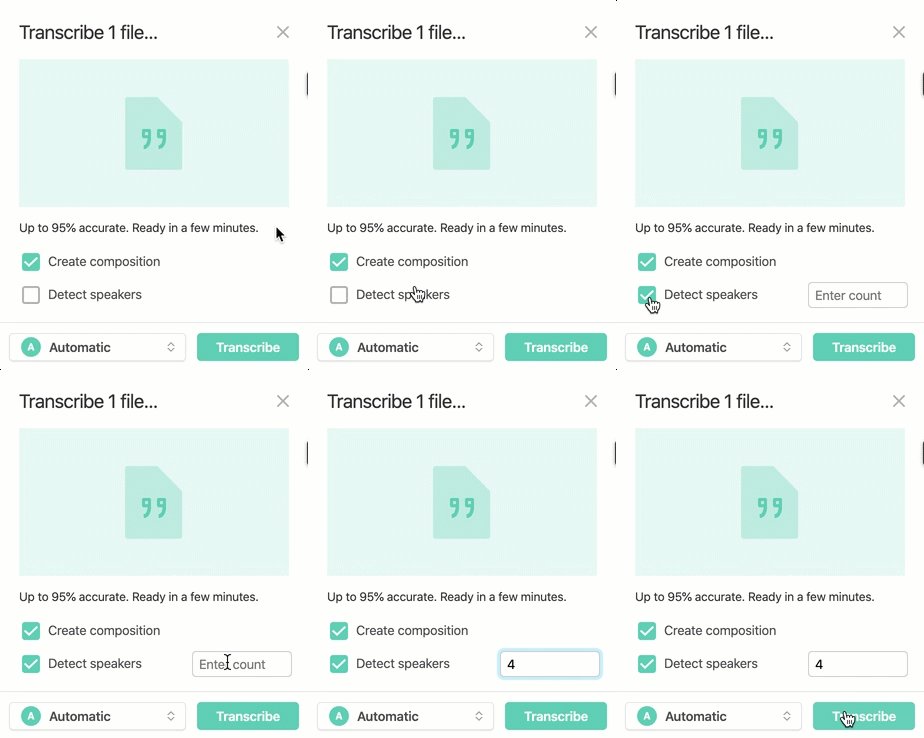
Now you can specify the number of speakers to identify in your transcribed audio files.
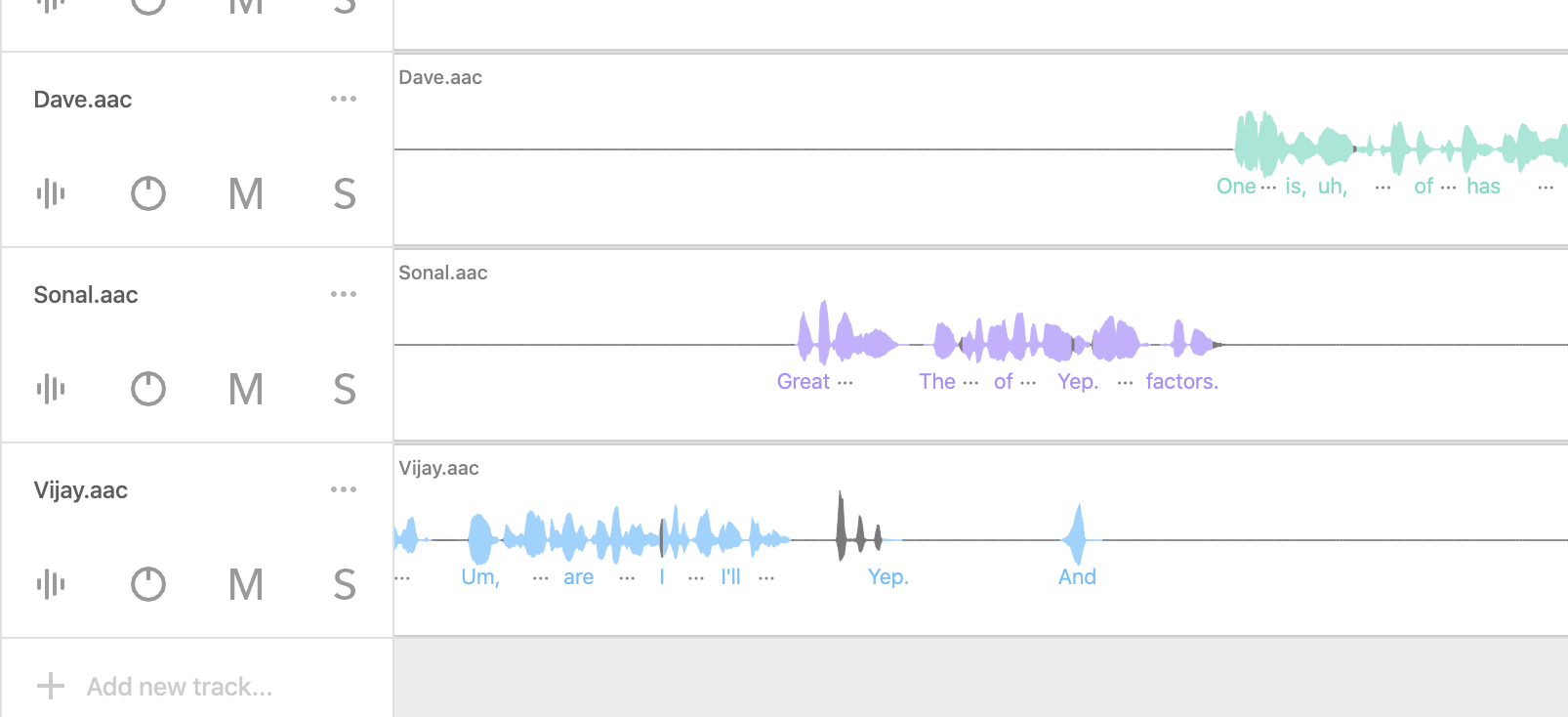
Each speaker gets its own color! This is especially cool in Sequence Clips because it helps you see when several people are speaking at the same time.
To edit the Speaker Label on a single paragraph, hold Shift and press Enter, or Shift Click. To cascade the Speaker Label change throughout your script, don't hold Shift.
While holding shift:

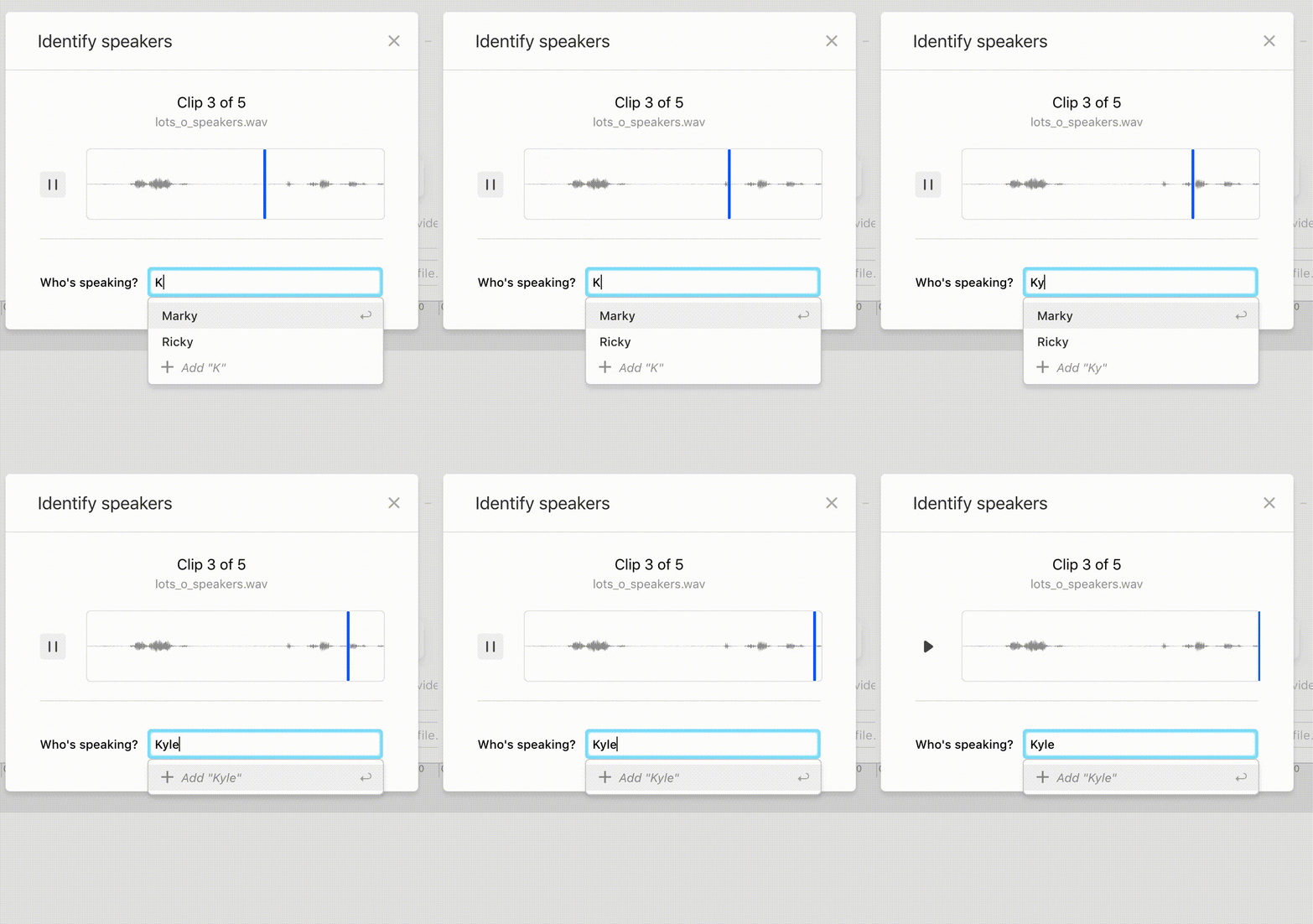
Add speaker labels to automatic transcripts without all the manual work. Simply run the Speaker Detective to find speakers, listen and name who’s speaking. To adjust labels by a few words, drag and drop. Descript will remember and apply smart labels, even as you cut, copy, and paste across compositions.
Performance improvements on long files with lots of speaker labels / markers
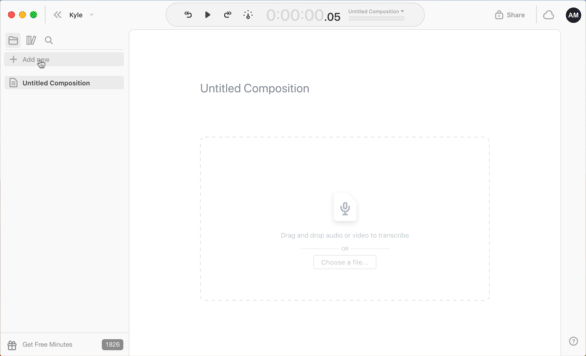
If you have a recording with each speaker with a different microphone, or saved as separate files in a call or video conference using an apps like Zoom or Skype, you can use Descript to create automatically combine the files into a single Composition, with speaker labels added automatically.
You can then make edits as if they’re one file, and then when you’re done, export the session and preserve the edits and the original tracks.
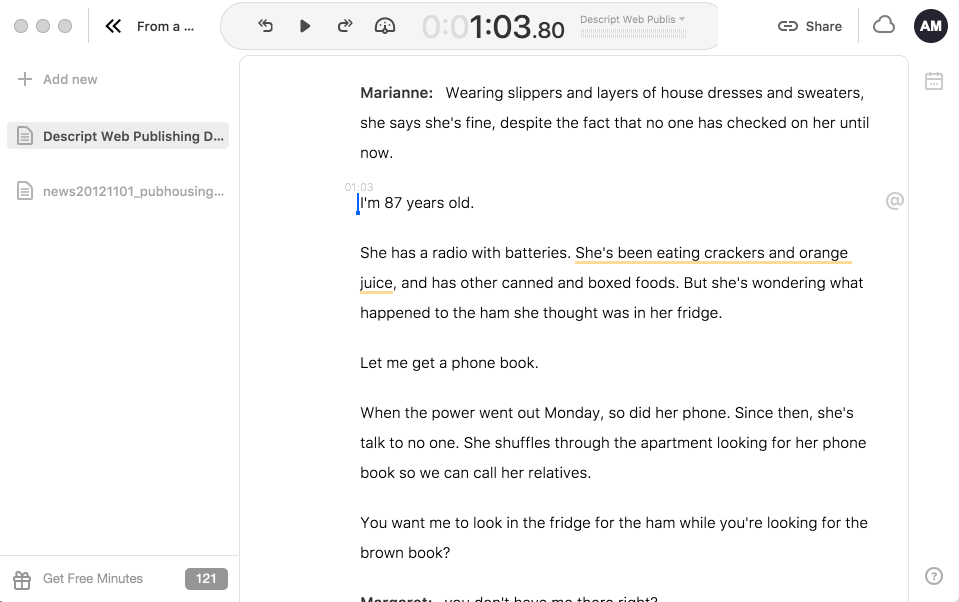
Type "@" and Descript will default to the speaker before last, making it very quick to enter speaker labels.
Load More
→